
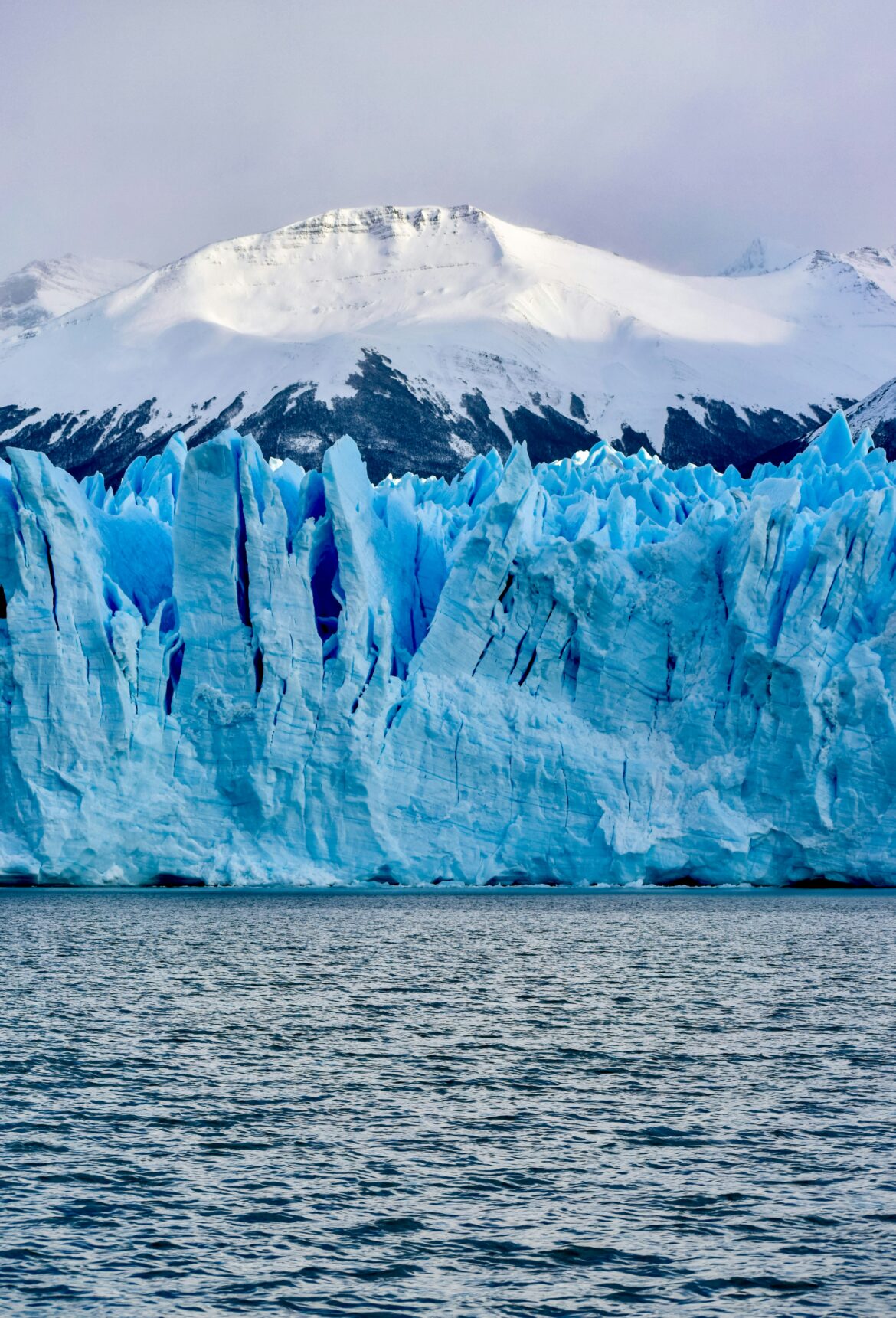
As eager young hikers travel to the end of the world in Patagonia to hike some of the world’s most beautiful mountains and glaciers, they may wonder at the words spray-painted on rocks bordering the trails: La ley de glaciares no se toca — Hands off the Glacier Law! These words protest the recent reform to Argentina’s innovative 2010 Glacier Law, which made all mining and exploration activities illegal across the country’s 16,968 glaciers. In the early days of climate change efforts, Argentina was a pioneer in protecting its glaciers, which provide water to 36 river basins across 12 provinces, supplying 7 million people with fresh water. In February 2026, anarcho-capitalist President Javier Milei and his administration passed a reform to the Glacier Law that loosened restrictions on mining. Under the new legislation, glaciers and periglacial environments (areas that are frozen for only part of the year) will continue to be protected until provincial leaders prove they do not serve as “strategic” water reserves – that is, if they provide water for human consumption, agriculture, biodiversity, as a source of scientific information, or as a tourist attraction. This reform notably shifts the responsibility of defining which glaciers should be protected from the Argentina Institute for Snow, Ice, and Environmental Sciences (IANIGLA) to the provincial governments.
While Milei’s administration argues that this reform will allow for more investment to boost Argentina’s long-flagging economy and for a more balanced approach to environmental protection, critics argue that it will disrupt critical water flows at a time when glaciers are increasingly important in the fight against climate change. This article will explore this debate and the surrounding political context that led to this reform.
Trapped Growth
“Environmentalists would prefer people to die of hunger before touching anything,” said Milei in a November interview. “The bill we are sending to Congress will bring investments that could create one million jobs.”
Indeed, at least four giant copper extraction projects have been placed on hold since the law was passed in 2010. Swiss miner and commodities trader Glencore said it planned to spend $13.5 billion to develop the glacial areas of Agua Rica and El Pachon if the reform passed, with an expected creation of 10,000 jobs during the construction phase, and 2500 once operational. In a difficult period of unemployment in Argentina, with 300,000 jobs lost since Milei took office, this opportunity has appeal. All four of the projects are planned on areas classified as periglacial with rock glaciers by IANIGLIA, but Glencore assures that “there is no rock glacier located in the footprint of the MARA project; neither in any current works nor within the foreseen area of future operations,” adding that water management is a “key consideration” in project design.
Further, provincial governments argue that this reform is in line with the ideals of sustainable development, which posits that environmental protection can occur without compromising economic growth; by allowing for more flexibility in determining which glaciers are critical, and which are worth the tradeoff for investments, the reformed glacier law allows for a more balanced approach towards environmental protection that takes into account the needs of Argentine citizens today. Milei underlines the lost economic growth in an interview in November: “Argentina doesn’t export even a single gram of copper, while Chile, which shares the same mountain range with us, exports $20bn a year.”
The move to shift glacier responsibility into provincial governments hands also resonates with those who seek more provincial autonomy. A long-standing conflict in Argentina centers on the concentration of power and bureaucracy in the capital, and Milei has framed this reform as a step towards greater provincial autonomy. Frederico Palavecino, a lawyer in Buenos Aires who works on mining projects in glacier law, believes it is right for the provinces to have autonomy over decisions on how to protect their glaciers, as it is their communities who will feel the consequences if these decisions are poorly implemented.
Finally, the glacier law presents a paradox, discussed by glaciologist Lucas Ruiz: Many of Argentina’s glaciers overlap with large deposits of copper, a critical mineral for renewable energy technology. The International Energy Agency reports that a high demand for copper is currently driving a supply shortage that could reach 30% by 2035. As the transition to renewable energy is one of the most promising ways to slow the rise in global temperatures, which are currently melting glaciers worldwide, proponents of the reform might argue that, ironically, to save the glaciers, you have to mine them.
There Are No “Non-Strategic” Glaciers
Agostina Rossi Serra, a biologist working for Greenpeace, warns that a decentralization and loosening of glacier management will lead to a “race to deregulation,” in which provinces will compete to adopt the laxest environmental laws to attract the most investors, prioritizing short-term economic growth over long-term impacts on glaciers. Rossi Serra notes that “a large part of our country, especially the regions that were keen to see this law amended, are arid and semi-arid areas, where water is a scarce resource.” She says these provincial governments are ignorant of the fact that water from melting glaciers helps reduce the impact of droughts within their semi-arid borders, which are becoming increasingly frequent due to climate change.
Glaciologist Lucas Ruiz also argues that the reform is based on false assumptions: “The most false part of it all is the claim that there are glaciers that do not contribute to rivers. If it’s a glacier, it has ice and contributes water. It’s very basic.” writes Lucas.
Guillermo Folguera, an environmental researcher from Argentina’s National Council for Scientific and Technical Research (CONICET), writes that “there is a clear intention among those pushing for these modifications to portray the current protection of the periglacial environment, or glacial waste rock, as a legal exaggeration, minimizing the importance of these areas within the glaciers themselves and the ecosystem services they provide.”
All three critics highlight a glaring flaw in the reform: a lack of technical criteria to determine what constitutes a “strategic” glacier worth protecting. As it stands, the decision on which glaciers to protect remains largely in the hands of provincial governments, who could be easily swayed by investors waving handfuls of cash.
Taking a Chainsaw to Environmental Protection
This reform falls within a broader context of Milei’s plan to liberalize Argentina’s economy. Milei has long advocated for laissez-faire economics, denouncing the Keynesian principles that governed previous governments. Since his election in 2023, he has been driving a tough austerity campaign to reduce the ballooning inflation rates that have been plaguing Argentina for decades, cutting funding for many government services. This “shock therapy” has already incurred high environmental costs, as funding for government-run environmental agencies has been reduced. Notably, the National Fire Management service struggled to contain the wildfires in Patagonia’s Los Alerces National Park, which raged for a month, following an 80% slash in funding compared to 2024.
Milei’s administration has also been distancing itself from international environmental agreements. Once a leading Latin American Voice at international environmental summits, Argentina recently withdrew from COP29 in Azerbaijan at Milei’s orders. Similarly, at the Summit of the Future at the UN’s General Assembly in New York, Foreign Minister Diana Mondino stated that Argentina would distance itself from the 56-point Pact for the Future, a decision she said was intended to prioritize the country’s values of economic freedom and private property.
This undervaluation of the environment accompanies Milei’s intensified efforts to align both economically and ideologically with the Trump administration, which has also been rolling back many of its environmental efforts. Namely, Trump withdrew from the Paris Agreement in both 2017 and 2025. Milei has said in recent interviews that he is currently debating whether to follow suit and withdraw from the agreement as well. The Argentinian president’s collaboration with the United States has produced significant benefits, culminating in a $20 billion loan that played a crucial role in his victory during the midterm elections. What’s more, Milei has recently signed a critical minerals deal with the US to secure supply chains between the two nations, further cementing their allyship. The reform to the Glacier Law will allow him to fulfill his end of the deal in supplying critical minerals, but at what cost? From 2012-2023, the rate of glacial melting increased by 36% compared to the decade prior, accelerating the rise in sea levels. As Milei continues to make decisions from Argentina’s House of Government, which sits a mere 9 meters above the nearby ocean, he had better be prepared to get his socks wet.
Edited by Noe Beaudoin
Disclaimer: This is an article written by a Staff Writer. Catalyst is a student-led platform that fosters engagement with global issues from a learning perspective. The opinions expressed above do not necessarily reflect the views of the publication.

Madeleine Landon is a U2 student pursuing an Honours International Development with a minor in Environment. She is interested in writing about Latin American Politics during her semester abroad in Buenos Aires.