
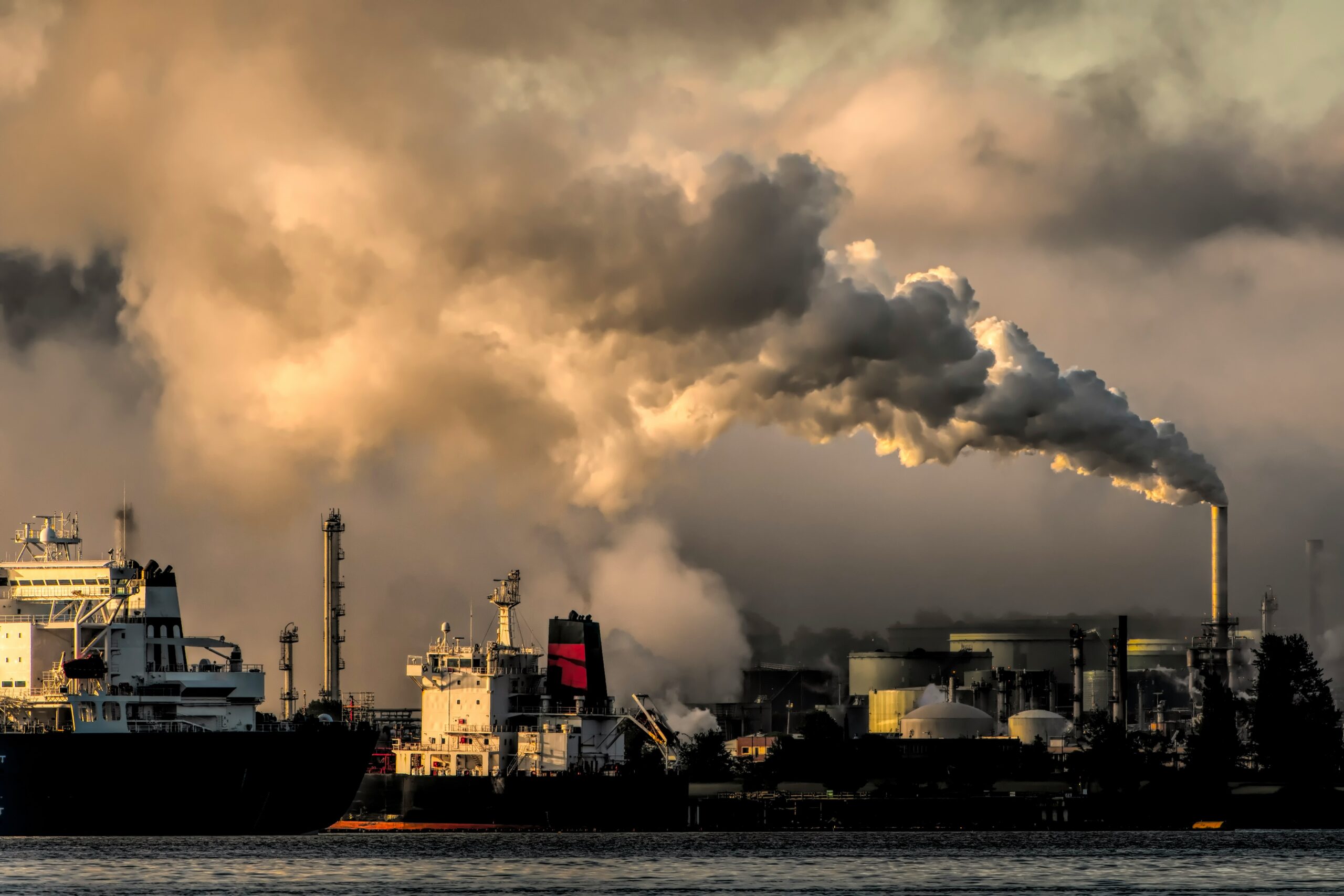
Allowable pollution limits are exactly what they linguistically imply: legal caps on the amount a given pollutant can be emitted or released. In the grand scheme of environmental policy, allowable limits are a great step towards pushing emitters to reduce their pollution and carbon footprints. That being said, these limits are characterized by certain caveats that produce unintended consequences. Climate change continues to loom as an increasingly serious issue. If the current global temperature of 1.1°C continues to warm past 1.5°C, environmental risk and damage will drastically and irreversibly increase. It is therefore crucial that we unpack how current solutions, like allowable limits, may be driving the harm themselves. Through mechanisms such as slow violence, allowable limits permit the accumulation of pollutants that compound harm over time.
In Canada, allowable limits are also referred to as guideline values. They represent emission levels below which health effects are “unlikely to occur,” and are set by considering direct effects on human bodies. Guidelines include both short-term and long-term exposure limits regarding health issues that may occur immediately after brief pollution exposure, or as a result of continuous exposure over an extended period. They also consider the effects of such pollutants on the quality of groundwater, air, soil, soil vapour, and water bodies, in relation to human health and agriculture.
While theoretically productive, allowable limits are flawed in practice. For several chemicals, such as insecticides like chlorpyrifos, dimethoate, and imidacloprid, there is no available data regarding “safe” concentrations. These chemicals do not have clearly defined limits. Companies are thus left to their own devices to try to limit the pollution of those chemicals on their own.
When toxicants were first brought to light as an environmental issue in the 1920s and 1930s, so too were industry concerns about the cost of mitigating those pollutants. Vested industry interests would have pushed back against the cost of changing their practices had pollutants been banned from the outset, despite the harm they cause when they accumulate.
Therefore, when faced with concrete limits, companies often treat them like targets rather than strict numbers to avoid. To industry eyes, these limits represent the amount of pollution that they are allowed to release without facing legal consequences. Further, emitting the maximum amount of allowed pollutants also maximizes profit that depends on such emission. To properly address climate change, changes in worldviews need to be made in addition to industry practices. Avoiding pollution cannot be viewed as a legal obligation, but as a fundamental necessity for the betterment of ecological systems and human health.
Aside from firm-level incentives, there is also a significant information problem surrounding allowable limits, which makes compliance a difficult factor to measure. From poor communication to insufficient record-sharing and transparency, regulators oftentimes do not have enough information to accurately determine whether corporations are adhering to pollution limits. Self-reported data paints an even blurrier picture, as industries are known to use indirect calculations and measurements rather than direct monitoring.
Pollution limits are also decided based on environmental and health risk assessments, conducted using science-based approaches and peer review. This reveals another problem associated with such limits: they do not consider Indigenous ecological knowledge or other epistemologies. What may be considered “safe” according to Western science may not be according to different communities. This is crucial, as minority groups such as Indigenous communities around the world face the brunt of climate change and are more vulnerable to its impacts. The fact that allowable limits exist at all goes against the human-nature relationship emphasized and protected by Indigenous groups, in that nature is not meant to be treated as a separate, less-than entity. No pollution is “safe” when looking through this lens.
Therefore, allowable limits can be viewed as a form of structural violence embedded in environmental law. Structural violence refers to systematic laws and politics that enable inequalities and allow them to persist. These inequalities are baked into a given government; they are not mistakes, but an aspect of the system in power. In this case, allowable limits defend two inequalities and forms of injustice: the ignorance of Indigenous ecological knowledge, and the allowance of pollution to continue in any capacity at all.
A form of structural violence that can be observed here is something Max Liboiron, in their book Pollution is Colonialism, terms “slow violence.” This encompasses violence that occurs gradually, incrementally, and is dispersed across space and time. We cannot see the effects of this violence right away. To that end, it is often invisible and not immediately obvious. This violence does not grab the attention of the media; it is typically not viewed as violence at all. And still, harm is certainly caused. Within the scope of this article, a major issue with allowable limits is that they assume ecosystems can cycle toxins out of the system before harm can occur. These thresholds, therefore, legally allow pollutants to enter the air, water bodies, and the ground. In any amount, pollution causes harm when it accumulates over time.
Allowable limits are set to maintain an economic status quo. Toxicity, therefore, encompasses not what causes harm, but how the reproduction of harm is organized, and how it is allowed to persist into the future – a form of slow violence.
Edited by Marina Gallo
This is an article written by a Staff Writer. Catalyst is a student-led platform that fosters engagement with global issues from a learning perspective. The opinions expressed above do not necessarily reflect the views of the publication.
