
How often do people think of the Roman Empire? Apparently a lot, at least for men, according to the recent Internet frenzy. But what about the Nubian Kingdom? Does this reign even exist in the collective imagination?
As I strolled the infamous halls of the British Museum in London, I, like many others, was drawn to the tombs of the Pharaohs in the Ancient Egypt wing. Yet, this was not what struck my attention. Instead, it was what lay in the beginning of the exhibit, before the mummies: a room dedicated to the Nubian Kingdom. Was I particularly uncultured, or did my world history class fail me? I was floored to have only heard of it in passing. Nubia was not a small or short-lived kingdom either; it was a rich empire that covered modern-day Sudan and Southern Egypt. The Nubians even ruled Egypt and were known as the “black pharaohs,” some of whom were women, a rarity in ancient times.
Since 2023, Sudan has been embroiled in a civil war with different factions financed by regional powers. Yet, the media has failed to represent it adequately on its platforms. This massive shift in narrative should be genuine cause for concern, or at least questioning. Why is it that most students in North American schools have not heard of the Nubian Kingdom whilst learning about the Ancient world? And more importantly, why is the media underrepresenting Sudan through a specific binary lens?
Seeing Sudan as Something to be Saved
It would be too simplistic to argue that the media forgets about Sudan because of a lack of infrastructure in the country or because communication lines are cut. Throughout history and in times of conflict, journalists have still been able to get a story out — think only of New York Times reporter Sydney H. Schanberg, who captured the brutality of Pol Pot’s labour camps in Cambodia.
Others argue that larger conflicts take center stage. This is unsurprising when searching in Canada’s National Post’s online database for articles from the past year. National Post has 437 articles about Ukraine, 244 articles about Palestine, and only 46 about Sudan. The search bar parameters are unclear, but the marked difference in quantity should be taken into account.
Usually, these conflicts are tied to the interests of the Western powers, such as the relative stability of Europe in the face of Russia, or the politics of ideology and the intersection of state and religion. Hence, the minimal coverage of the Sudanese civil war is expected, as it is a proxy war in which the West’s stakes are of lesser importance. The United States or other European countries’ investments are not under threat. Instead, both warring factions receive foreign support: the brutal paramilitary group Rapid Support Forces (RSF) is reportedly backed by the United Arab Emirates, while the Sudanese Armed Forces (SAF) allegedly receive covert support from Saudi Arabia. In a proxy war, it is as though the country loses its autonomy, being played like a puppet by external governments for the control of its own resources — especially gold in the Sudanese context.
Sudan lacks a central presence on the world stage and the economy to give it the necessary voice to speak out. It is also on the wrong continent for broad international and media support. Arguably, conflicts in Africa or Asia are given a lesser role or seen merely as battlegrounds for the Great Powers. After all, many North American schools teach that the Cold War was the “most peaceful war,” implying no violence happened. They usually mean that no conflict occurred in the Western Hemisphere, even as soldiers fought bloody wars across Asia and Africa, such as in Korea and Vietnam, to protect the interests of their respective hegemons.
Similarly, the media ties Sudan to broader concepts of development and colonialism, with racism ingrained within Western academia and society. The headlines insinuate that the violence was “natural” to happen in a sub-Saharan country since most articles specifically focus on its unsettling scale. Reuters’ headline, “UN probe says mass killings, rapes, abductions, starvation by Sudan force amount to genocide,” speaks to this narrative.
The other side of that same coin centers around poverty and helplessness. CNN’s headline “14 million children in Sudan are in dire need of humanitarian support, says UNICEF” and the BBC’s “Sudan’s healthcare system on brink of collapse after cuts, medical charity warns” are obviously important. However, the two visions of Africa emerge as either violent/primal — Europe as the colonizer bringing stability — or helpless — Europe as the white saviour.
This repeated messaging about Sudan having dual identities, either in dire need of help or facing extreme violence by local groups, reflects the West’s perceptions of sub-Saharan Africa and, by extension, the developing world, as binaries. There are even similarities with Edward Said’s Orientalism, where the “others” — the non-Europeans — are seen as “untruthful” compared to the superior Europeans, but still admired for their culture, which the Europeans sought to recreate.
A Possible Avenue for Change
Now, I am not arguing for the media to stop covering Sudan. I am concerned with how Sudan is portrayed through a poverty/violence lens. When (or if) the country makes it to the headlines, the conflicts are framed as chaos and carnage. Then again, the media must convey feelings and emotions to encourage people to read the article, learn about the issues, and care. Clearly, emotional marketing is effective, as seen in philanthropic campaigns that feature crying children to prompt Westerners to donate.
We must return to the root cause: children’s education. It is standard curriculum to learn about Ancient Egypt, so why is it so rare to learn about the Nubians who ruled over Egypt? Is it because they were black pharaohs? It is baffling to cover so many empires of that era without covering those who stopped the advance of the Romans further into Africa, a huge milestone. Perhaps this lack of education is related to Said’s Orientalism, in which Egypt fits a pan-Oriental vision that is “othered” by the West. In other words, there is no room for a different “other” who does not fit into the white history or the Oriental vision. As often is the case, education is key to dismantling stereotypes and barriers. It could be a good first step toward improving our views and understanding of countries and conflicts in countries such as Sudan.
Edited by Anya Sood.
This is an article written by a Staff Writer. Catalyst is a student-led platform that fosters engagement with global issues from a learning perspective. The opinions expressed above do not necessarily reflect the views of the publication.
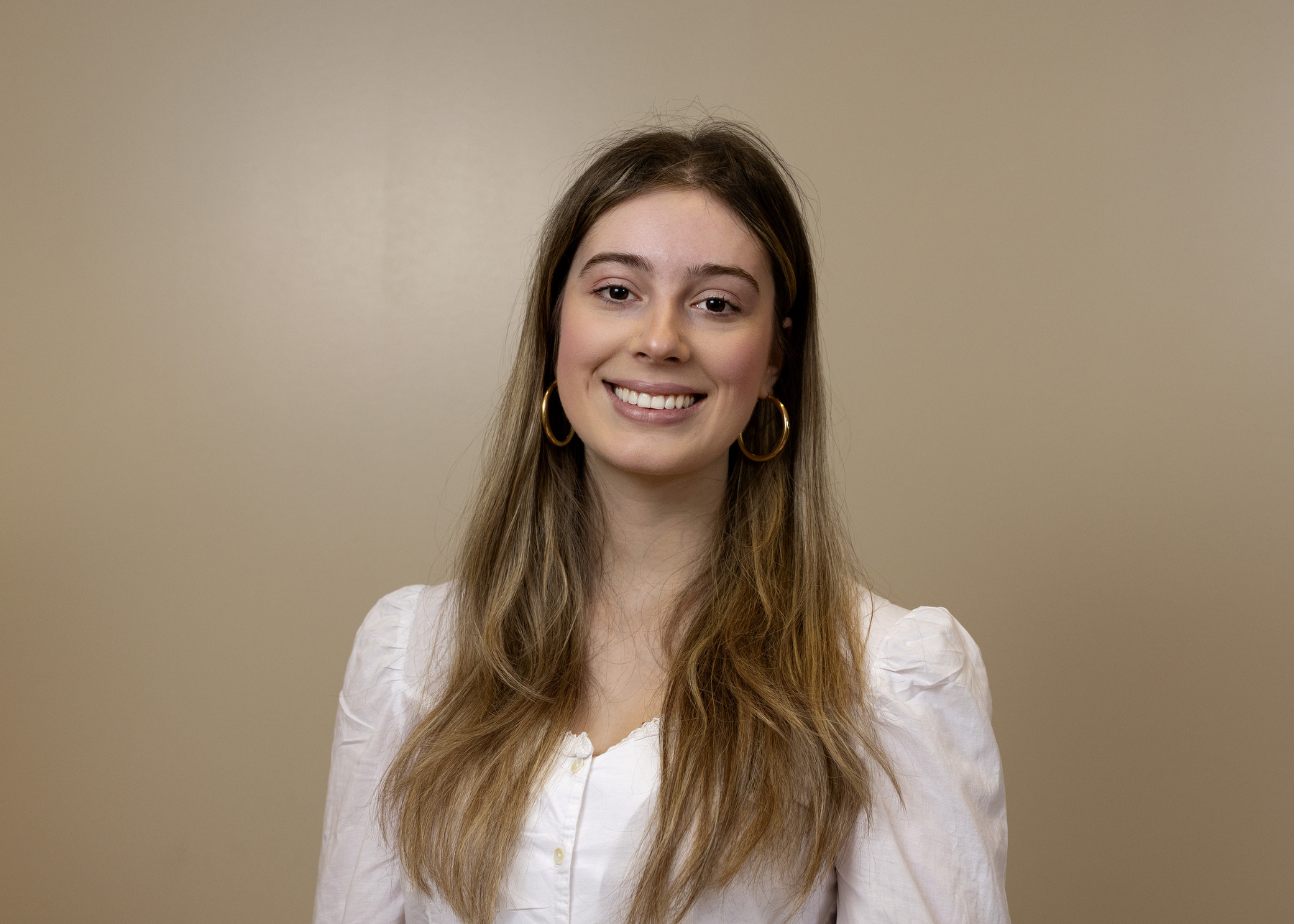
Maia Sunnberg is a U3 student at McGill University. She is currently pursuing a joint-honours degree in International Development and Political Science, with a minor in German. Human rights, specifically labour and minority rights, as well as ethics in an era of globalized trade, are her particular fields of interest.