
War does not just unfold on the battlefield. It is produced through media, discourse, and writing.
In recent years, people have grown accustomed to consuming war and human suffering through their phones, as spectators. But spectators are not neutral. In the place of witnesses, audiences carry responsibility, because how we watch, react, or fail to react shapes how war is understood and consequently how it is carried out.
As the devaluation of human life becomes normalised, human agency is gradually pushed out of the political realm. This dynamic is largely used to explain the US-Israeli politics in the region: ‘Desecuritisation without an audience’, referring to a context in which political actors no longer need to justify violence to those in whose name it is carried out. Once normalised in public discourse, it is no longer perceived as a political issue that audiences can act upon.
American and Israeli governments, since 2023 through the annihilation of the Palestinian people, and in 2026 with the illegal attacks on Iran and Lebanon, have neutralised publics not only in their own countries, but also across Europe and, more broadly, the West. Through the constant violation of international law and the absence of meaningful political justification, wars become matters of private transactionalism that destroy the possibility of mediation by the people.
Putting the Human At the Center
We need to remember to humanise. For normalisation and ‘desecuritisation’ to function, citizens must come to see threats and security politics as existing as given realities that are independent of their own political perceptions or consent. This way, people’s agency is displaced from politics. Yet as witnesses, and especially with social media, our role in the production of discourses, knowledge, and perceptions of the people who suffer these wars is central to the wars themselves.
Trump and Netanyahu don’t try to use an internationally accepted language, to say the least. At the White House and in Tel Aviv, discourses are blunt and unrestrained with repeated references to extermination. The language used by both leaders isn’t one that tries to convince people of benevolence. Rather, it takes pride in destruction and aggression. This gradually redefines wars and conflicts as driven by transactional logic stripped of any moral considerations. Yet this assumption is misguided, as it overlooks the fact that people, within their own political systems, are the ones who conceptualise security.
Following ‘desecuritisation theory’, this erases the audience. It is not about shifting the responsibility of elites onto the public. Rather, it critiques a system where people are strategically sidelined from their own political systems through a depoliticisation of violence. Alternative visions of security are marginalised and made unthinkable. Consequently, citizens are stripped of the agency to oppose the wars made in their names by securitising actors that put state interests above people.
Governments seem to have abandoned a reality where the human is put at the center of the process. However, strengthening the importance of people in political processes and rejecting exclusionary logics that hinder democratic contestation is essential. Only then can citizens in Beirut, Gaza, Tehran, or even Tel Aviv mediate and either receive or take accountability for the wars they have – or made – endured.
When Life Depends on Empathy
The lives of American, European, and Israeli citizens do not depend on anyone’s empathy. They are institutionally and militarily protected by a system that considers their survival as de facto. Yet, the thousands of lives lost in Lebanon, Iran, and Palestine don’t. Their survival depends on the benevolence of those who attack, those who give aid, and the empathy and attention of the witnesses. These people shouldn’t need our ‘pity’; they need the same institutional guarantees of fundamental rights we benefit from.
The Israeli and American governments have, for a long time, tried and successfully managed to convince populations of a delusion. Their survival depends on the devastation of those whose lives are made to matter less. It’s on this premise that the Israeli and American governments launch so-called ‘preventive wars’ to deter threats that haven’t materialised yet.
These military actions are completely illegal, and for the stability of our international system, UN experts urge Western governments to oppose these actions. In fact, in an arbitrary system where lives depend on empathy and the benevolence of the powerful, diplomacy and mediation are replaced by uncontained military force, destroying multilateralism.
This complicates, even for supposedly strong European powers, the contest of these wars. The normative frameworks that once justified military interventions under ideals like ‘humanitarianism’ have weakened. Israeli and American leaders no longer seek international approval for their actions.
Indifference As a Weapon Of War
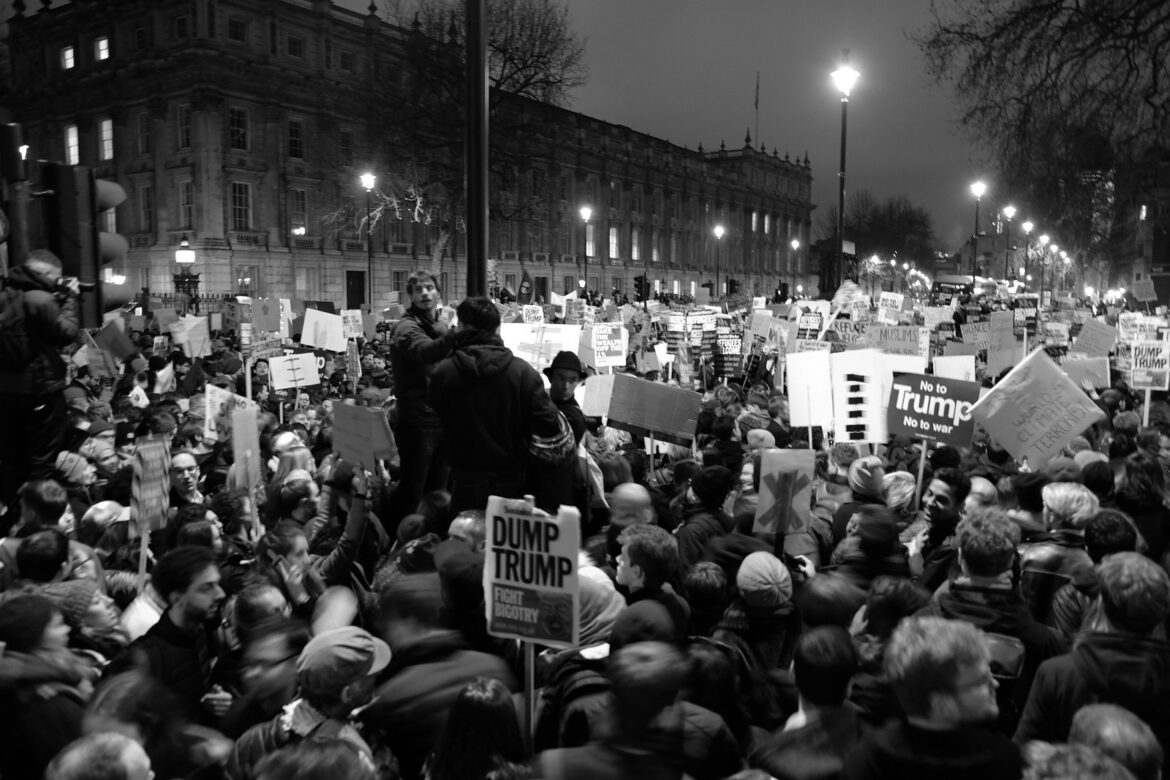
Audiences are not passive: their indifference is used as a weapon. Watching, perceiving, and discussing are productive acts participating in political discourses that either render the abnormal normal or refuse normalisation. On any side of the conflict, behind every number, statistic, and video, are people whose lives are disrupted by constant sounds of alarms, bombs, and the loss of their fundamental resources and liberties. It’s with these considerations in mind that we should approach the content of our media.
Indifference hinders the mediation of conflict. Societies have strength insofar as they don’t internalise norms that entail the banalisation of extremism and a distancing from politics. Especially in the Western world, where a privileged way of life makes it difficult to conceptualise such suffering, remaining aware of the consequences of our own political systems fosters political awareness and, with it, the potential for democratic contestation. People become exhausted by a surplus of information they often can’t grasp, which eventually leads to desensitization. When violence no longer provokes a reaction, when it is neither contested nor meaningfully engaged with, it ceases to require justification.
In this sense, indifference does not simply accompany war; it permits certain actors to have impunity. This impunity is translated into governments not feeling compelled to justify their policies to their citizens.
When accountability weakens, it becomes legitimate to ask :
Who Wins?
Putting morality aside, strategically, this new war brings no clear benefits to the people who support it.
Some societies, such as the Israeli one, have proven themselves to be shockingly accepting of the abomination of their country’s policies, and they are not the only ones. Protests did spark all over the world – including Tel Aviv – but public opinion is still very divided. For many, it feels ‘worth it’ if it deters the Iranian threat. In reality, ICG analysts show that Netanyahu and Trump are dragging their countries into wars on which they are gradually losing control.
Israel will struggle to de-escalate even if it wishes to. Specialists suggest the IDF’s operational capacity no longer meets its strategic realm, and the continued annihilation of its neighbours is becoming fundamentally self-destructive. The war has left Trump facing more problems than those he initially promised to resolve. The goal of regime change initially stated has not been reached, rather worsened in the face of an Islamic regime in which its own citizens are now paying the double price of repressive protest, and US and Israeli strikes.
The war expands horizontally, falling into an escalation trap with huge consequences for the global economy. The US’s strategic process in this war is still unclear, with a foreign policy increasingly based on aggression, shedding light on the global dependence on American hegemony. However, while this hegemony remains militarily strong, it is increasingly losing influence as its credibility in upholding international norms and alliances erodes.
In this light, as audiences and consumers of war, we must remember to humanise, to insist on placing the human at the centre of political processes. Without this, citizens lose the ability to demand accountability or to meaningfully contest wars carried out in their names.
Edited by Lou Didelot
This is an article written by a Staff Writer. Catalyst is a student-led platform that fosters engagement with global issues from a learning perspective. The opinions expressed above do not necessarily reflect the views of the publication.

Maria Lecollinet is a first-year student at McGill University, currently pursuing a B.A. in International Development Studies and Political Science. She serves as a writer for Catalyst and has a particular interest in institutional perception, youth participation and civic engagement as well as human rights and the EU’s external relations.