
In April 2026, NASA’s Artemis II mission carried astronauts around the moon for the first time in over 50 years. But the mission almost didn’t happen. What does this story say about the state of America and its politics?
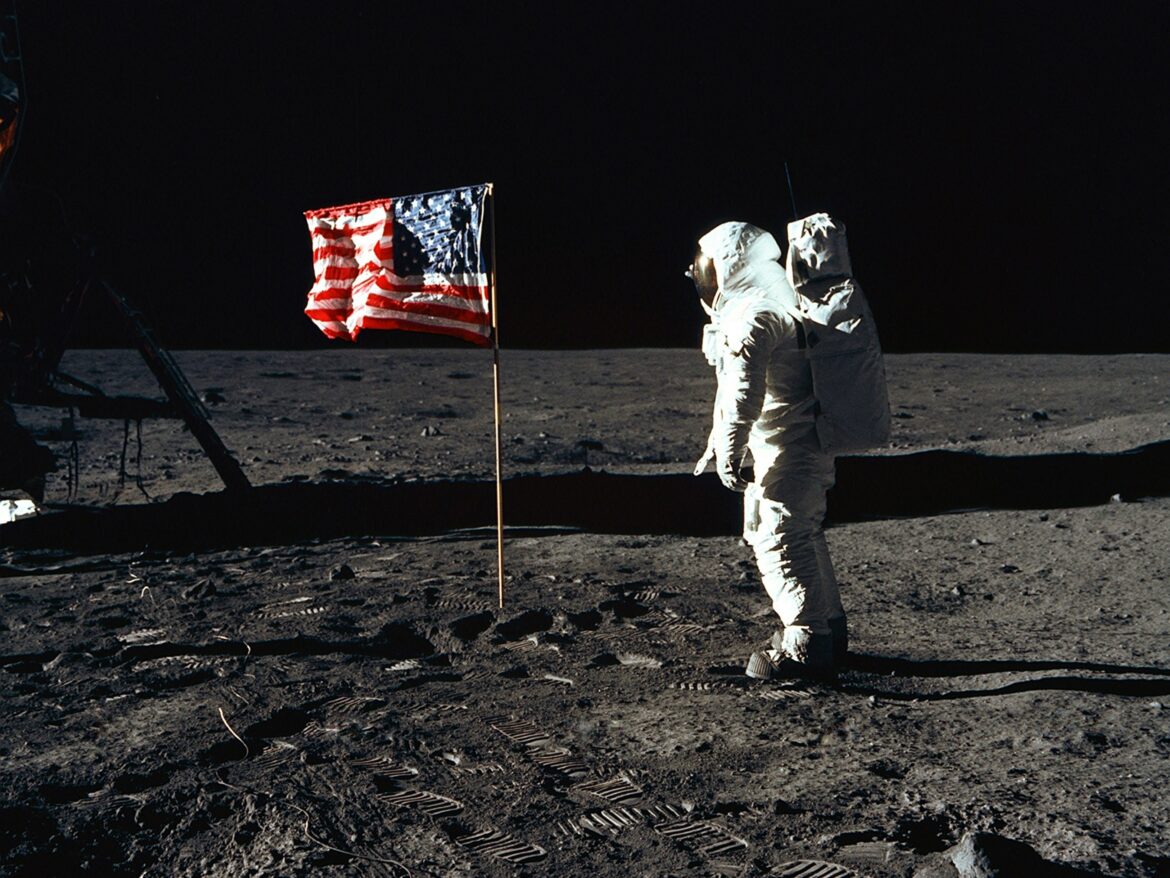
On July 16, 1969, American families gathered around their television sets to watch two astronauts launch toward the moon, parents quieted their children, neighbours packed into living rooms, and for a few hours, no one talked about money, politics, or Vietnam. Everyone just watched. It didn’t matter if you lived in Missouri or Massachusetts– you were simply American, and America had done something extraordinary.
That moment offered more than spectacle. It was a reminder that public institutions could give people a shared sense of purpose. In a country as divided as the United States, NASA has always been one of the few things that can make people stop arguing and look up.
Those children from 1969 are grandparents now. And on April 1, 2026, they sat down with their families and watched it happen again. NASA’s Artemis II mission took off from the Kennedy Space Center in Florida, carrying four astronauts past Earth’s orbit and around the moon for the first time in more than 50 years. Two generations separated by almost half a century watched the same liftoff.
But that unifying NASA moment almost didn’t happen. And the politics behind it reveal something larger about what the United States considers worth investing in.
NASA should be viewed as more than a space agency. It functions as a development institution within an advanced economy—one that channels public investment into long-term scientific, technological, and exploratory projects. In this sense, development is not only something that happens in poorer countries or emerging economies, but a process that continues even in states at the center of global wealth and power.
The Artemis program makes this clear.
“Going For All Humanity”
The Artemis program is NASA’s most ambitious project since the Apollo era. Its goal is more than just returning to the moon — we know they can do that already. The mission is to establish a human presence on the moon’s surface and lay the foundation for an eventual mission to Mars. Artemis II was the program’s first mission involving astronauts, sending four of them on a 10-day mission around the Moon and back.
The crew made history beyond the mission itself. Victor Glover became the first person of color to travel past low Earth orbit, and Christina Koch became the first woman to do the same. The faces looking back at America reflected what the country actually looks like. All together, though, including Reid Wiseman and Jeremy Hansen, they became the farthest-space-travelling humans of all time.
Artemis is also not just American; it is an international collaboration that is larger than one flag. Space has become one of the few places where countries can still work together in a way that feels friendly, from science partnerships to building the International Space Station.
In a climate defined by short-term thinking mixed with the constant fight over public spending, space exploration stands out as proof that the government can do something ambitious and useful. Yes, it’s expensive; yes, it comes with questions. But that’s also why it matters—it asks a country to invest in something larger than itself.
“But They’re Closing All The Factories Down”
In May of 2025, the Trump administration released its proposed federal budget for the 2026 fiscal year. For NASA, it was the most devastating budget proposal in the agency’s history. The White House wanted to cut NASA’s total funding by 24%, from $24.8 billion USD to $18.8 billion. More alarming was what was proposed for NASA’s Science Mission Directorate, the part that oversees scientific research, which had a cut of around 47%. This meant the potential cancellation and defunding of around 40 active and planned missions, less research grants that train scientists, and the erasure of entire offices. It would’ve been, as Casey Dreier, chief of space policy at The Planetary Society described them, “going out of business kinda cuts.”
Beyond the numbers, thousands of NASA civil servants were pushed to resign through a deferred resignation program, erasing decades of expertise and knowledge. Furthermore, missions that were already in action faced termination. International partnerships were put at risk. The Nancy Grace Roman Space Telescope was ahead of schedule and under budget, and nearly lost its funding as a whole. The programs meant to inspire the next generation of Americans to look to the sky were marked for elimination.
At the same time, though, it’s important to be fair. The Trump Administration’s argument was one of fiscal responsibility and a re-direction towards crewed spaceflight and a future Mars program. That’s not unreasonable. But there is a clear difference between reshaping an agency and emptying it out. What was proposed in May 2025 was more retreat than reform. And Americans, on both sides of the spectrum, were not willing to accept it.
But that’s what it looks like when a country values something: it shows up when it’s threatened. The bipartisan response to NASA reveals something about American politics that is often forgotten. Even in a polarized system, there are still shared commitments to long-term investment.
The United States is not a finished project, as it’s sometimes described. Development is not restricted to the Global South. A country that funds NASA is still investing in its future, choosing to keep institutions whose success is measured by decades, not election cycles.
“America, Where Are You Now?”
This past January, Congress rejected almost every cut. Congress’s budget passed 82-15 in the Senate, 397-28 in the House—numbers that transcend party divisions. Republican and Democrat lawmakers looked at what was proposed and said no, because space exploration goes deeper than politics.
NASA received $24.4 billion, almost identical to the previous year. The Science Mission Directorate, facing a 47% cut, lost only 1%. The missions that would’ve been shut down were saved. And when combined with the additional $10 billion given to NASA in the One Big Beautiful Bill Act, NASA’s budget for 2026 became the largest it had been in almost 30 years.
It’s true that there are other fights to have about what else deserves protection. The budget makes choices, and they’re not all good. But that’s exactly why this moment is important. In a political climate where agreement is rare, the defence of NASA proved that shared commitment to long-term goals is still possible. The question is whether America still cares about developing something larger than itself. And in January, Congress said yes.
So what?
On July 20, 1969, four days after that rocket left Earth, Neil Armstrong walked on the moon. An estimated 600 million people watched it live. Walter Cronkite, the voice of America, took his glasses off and went silent. There were no words, and there didn’t need to be. In living rooms across the country, communities gathered together to watch a black and white screen and witnessed something never before seen. What they were watching was proof that a country, imperfect and complicated, could still achieve something worth believing in.
America is a complicated place in 2026. It is often difficult to feel proud without it feeling like you’re ignoring something. But pride and awareness are not meant to be opposites. When you love something enough, you want to fix it. Patriotism without criticism is complacency, and criticism without pride is too easy. The people who have pushed America to be better, in every era, were not the ones who stopped caring. Instead, they were the ones who cared too much to look the other way.
Pride in your country never requires perfection. It only requires that you believe that it can be better. When that rocket launched on April 1st, carrying four astronauts towards the Moon for the first time in 50 years, it didn’t ask anyone what their political affiliation was. It didn’t care who you voted for or what you believed. It just went up, and with it so did the American people.
That is what NASA has always given us. Moments that belong to everyone. What’s coming next is long, but exciting. With Artemis III, the moon is coming, then Mars. And when those moments arrive, Americans, and the world, will gather again, maybe in their living rooms, or around a phone screen, and they will watch together.
Some things are worth protecting, and some are worth believing in. NASA is both.
Edited by Noé Beaudoin
Disclaimer: This is an article written by a Staff Writer. Catalyst is a student-led platform that fosters engagement with global issues from a learning perspective. The opinions expressed above do not necessarily reflect the views of the publication.

Judah Meltzner is in his first year at McGill University, hoping to pursue a B.A. in International Development Studies. Originally from Boston, Massachusetts, he is particularly interested in American politics in addition to the happenings of the United Nations.