
In 1850, England and France were connected for the first time by an undersea telegraph cable spanning the English Channel. Today, there are over 500 commercial undersea cables linking continents and markets across the globe. Approximately 99% of all international internet traffic flows through these submarine cables, as they have increasingly become the backbone of the global economy. Any disruption in the flow of data through cables can shut down national economic activity, security systems, emergency services, and internet access for billions at a time. As our data consumption grew exponentially over the past decade, the undersea cable network has had to expand accordingly. Since 2014, the total length of submarine cables has increased from 620,000 miles to one million miles last year.
Over the same period, a clear trend in cable ownership emerged. While traditionally owned by telecommunications companies, submarine cables are now primarily owned by United States-based hyperscalers — large technology companies that operate enormous cloud computing networks. Dominating corporations such as Amazon, Google, and Meta are becoming increasingly involved as they seek to support the infrastructure required by data-intensive artificial intelligence.
Despite their critical role in the global economy, subsea cables are governed by a remarkably limited legal framework. The primary organization dedicated to overseeing submarine cables is the International Cable Protection Committee (ICPC). Founded in 1958, the ICPC is mainly comprised of government agencies and commercial companies. However, its role is largely advisory, issuing recommendations rather than enforcing regulations. Similarly, the UN Convention on the Law of the Sea (UNCLOS) lacks the practical authority necessary to translate legal obligations into compliance. While the UNCLOS defines boundaries of state jurisdiction and identifies punishable offences involving submarine cables, it lacks a multilateral enforcement mechanism able to assist states in investigating violations and enforcing penalties.
Evidence of a Growing Covert Threat
The shallow waters of the Baltic Sea have been a major hotspot for the targeting of undersea infrastructure in recent years. On December 31, 2025, Finnish telecommunications company Elisa reported a major disruption in one of its fibre-optic cables linking Helsinki and Tallinn, Estonia. Finnish authorities identified the cargo vessel that had recently departed St. Petersburg, the Fitburg, as the primary suspect. A high-profile military operation quickly revealed that the ship’s anchor had dragged along the seabed, likely causing cable damage. However, as with many incidents involving cable disruption, determining accountability proved challenging. The multinational nature of the Fitburg’s identity prevented the establishment of concrete legal responsibility. Built by a Korean company, departing from Russia, and crewed by Georgian and Kazakh nationals, the ship fell across multiple jurisdictions, which dispersed responsibility and made it difficult to hold any single actor accountable.
A year prior, two power cables and four telecommunication lines connecting Finland and Estonia were damaged under nearly identical circumstances. Although the Finnish government seized the Eagle S, a tanker linked to Russia’s “ghost fleet,” authorities were ultimately unable to impose legal punishment due to insufficient evidence to attribute responsibility.
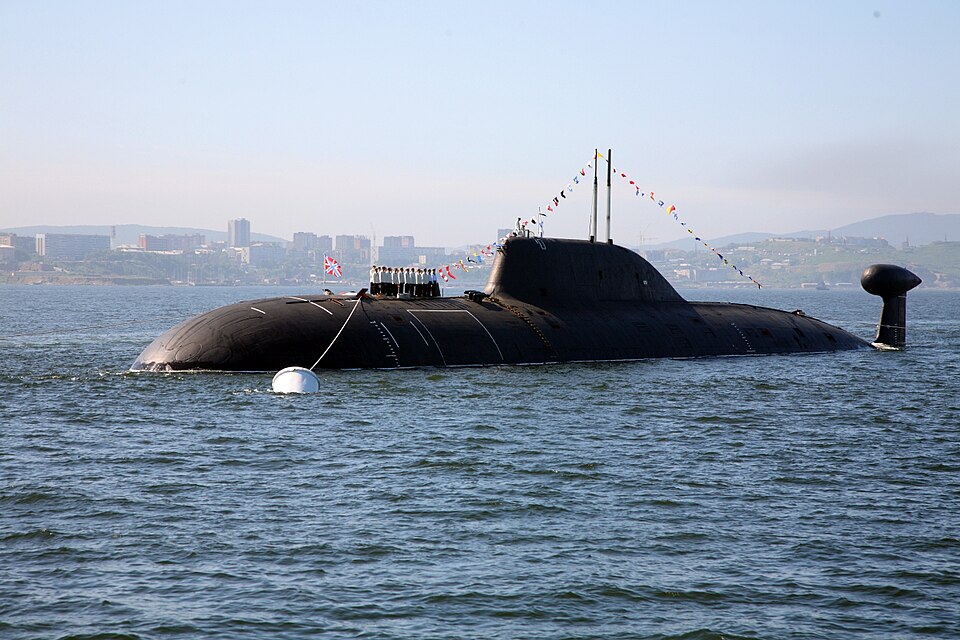
The existing vulnerability of undersea infrastructure, already intensified by challenges of attribution and an insufficient legal framework, has now been compounded by growing concerns over deliberate state-backed operations. This threat was underscored by a UK April 2026 government statement revealing that Russian submarines had conducted covert activity around vital undersea infrastructure in British waters. According to Defence Secretary John Healey, three Russian submarines carried out a surveillance operation targeting cables and pipelines in waters north of the UK. Healey states that an Akula-class submarine was used as a diversionary tactic while two other GUGI (Main Directorate for Deep Sea Research) submarines gathered intelligence. As 77% of Britain’s gas imports arrive through pipelines under the North Sea and 90% of the UK’s daily internet traffic travels through submarine cables, the discovery of Russian activity surrounding such critical infrastructure is particularly alarming. British authorities warned President Putin, declaring that any attempt to damage Britain’s cables or pipelines will be met with serious consequences. Moscow has dismissed all claims.
The Oceanfloor as a Geopolitical Frontier
Ultimately, the ocean floor has emerged as a new arena for geopolitical competition. Alongside cyberattacks, the leveraging of energy dependence, and other forms of hybrid warfare, attacks on undersea cable networks represent another expression of a broader shift toward coercive state behaviour. In response to growing threats, NATO and the Royal Navy have strengthened their maritime surveillance efforts, increasing patrols across the Baltic seabed and the UK’s surrounding waters. While these efforts may improve the detection of cable disruption, they do not resolve the larger legal gap. Today, no comprehensive international treaty protects undersea cables as a form of critical infrastructure, nor does any judicial mechanism exist to issue punishment for deliberate destruction. Addressing this gap, unsurprisingly, requires the increasingly elusive commodity of international cooperation. Strengthening domestic legislation and information sharing between states, international organizations, and private cable operators may lay the groundwork for more meaningful international regulation. The international community’s response will ultimately determine whether globalization’s vulnerabilities will become tools of coercion or a source of shared prosperity.
Edited by Lou Didelot
This is an article written by a Staff Writer. Catalyst is a student-led platform that fosters engagement with global issues from a learning perspective. The opinions expressed above do not necessarily reflect the views of the publication.

Natalia Sodhi is in her third year at McGill University, currently pursuing an Honours B.A. in International Development Studies with a minor in Urban Geography. She serves as a staff writer for Catalyst and is particularly interested in the global refugee crisis, international migration flows, and sustainable urban development.